
The short answer
In most rental situations, the landlord is responsible for keeping the garage door and opener in working condition when you move in, and for fixing mechanical failures that happen through normal use — a worn spring, a dying opener motor, a door that's rusted from years of salt air. The tenant is usually on the hook for damage they cause, like backing a car into the door or jamming it off track by forcing it closed. The exact split depends on your lease, so whoever's losing this argument should go pull that document out before anyone claims victory.
Why this gets confusing in the Keys
Garage doors here take more abuse than they would inland. Salt air corrodes hardware and fasteners even when nobody's touched the door in months. Humidity swells wood panels and makes steel doors feel sticky on the track. Afternoon downpours and hurricane-season wind loads stress rollers, hinges, and the opener itself. So a door that's struggling isn't automatically anyone's "fault" — a lot of the wear is just the climate doing its job. That's exactly why move-in documentation matters: it separates what the environment already did to the door from what happens after you start using it.
What's usually the landlord's job
- Repairing or replacing broken springs — these wear out from cycle count and rust, not tenant misuse
- Fixing an opener that fails to respond, reverses randomly, or won't connect to a remote
- Addressing a door that's come off its tracks due to worn rollers or hardware, not a collision
- Dealing with panel rust, corrosion, or swelling that predates the tenancy
- General maintenance and tune-ups to keep the door functioning safely
What's usually the tenant's job
- Damage from an actual impact — a car, a bike, a cooler that got away from someone
- Forcing a door that's jammed instead of reporting it, which often turns a small fix into a track or panel replacement
- Not reporting a problem promptly and letting it get worse (a slow leak of lubricant turning into full rust, for example)
- Misuse of the opener, like disabling safety sensors
None of this is law — it's how these costs typically shake out, and your lease can assign things differently. If the lease is silent, this is the conversation to have with the landlord in writing before anything breaks, not after.
What to inspect at move-in (do this before you sign anything)
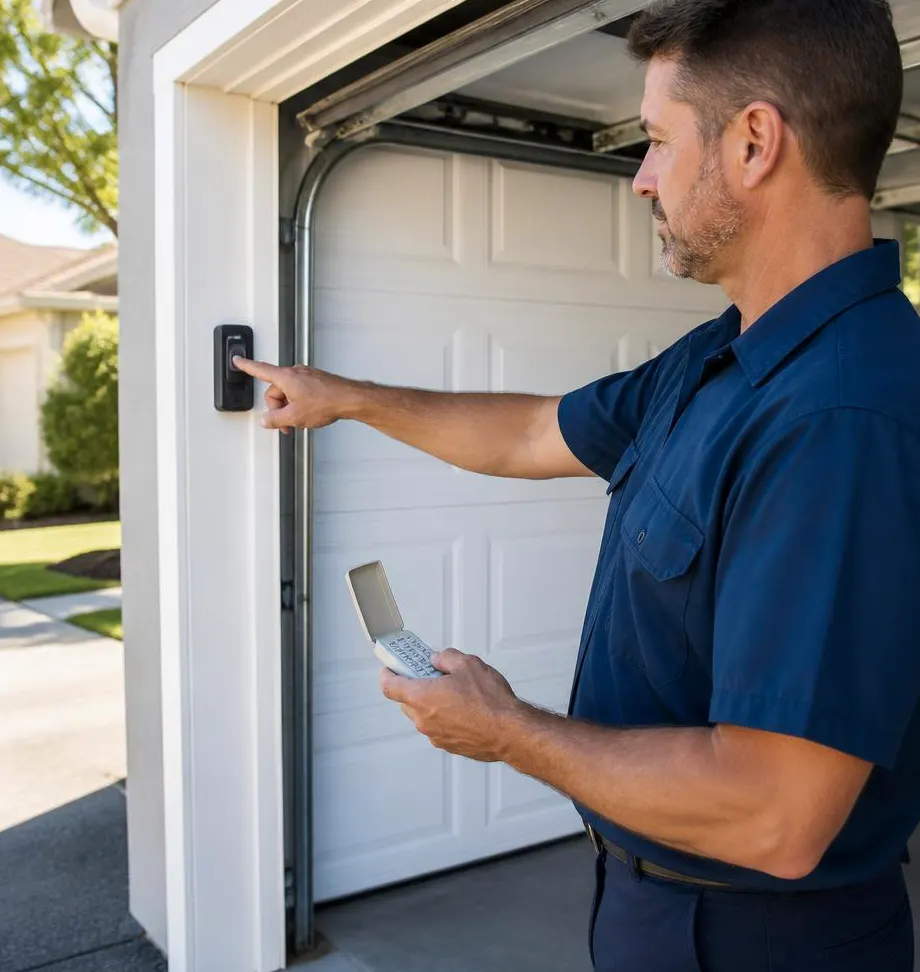
- Operate the door manually and by opener — it should move smoothly without grinding, jerking, or stalling halfway.
- Check for rust on the tracks, springs, and bottom panel edge — common here even on newer doors near the coast.
- Look at the weatherstripping along the bottom and sides — cracked or missing seals let in humidity and pests.
- Test the auto-reverse safety feature by placing a block in the door's path — it should stop and reverse, not keep closing.
- Listen for noise — grinding, popping, or a loud bang usually points to spring or roller issues that existed before you moved in.
- Photograph everything, including panel dents, rust spots, and the opener's remote and keypad condition, with a timestamp.
- Get it in writing — a short move-in condition report, signed by both parties, saves everyone a headache later.
If the door has issues at move-in, flag them to the landlord immediately and ask for a repair timeline in writing. That protects you from being blamed for pre-existing wear when you move out.
When to call Tavernier Garage Door Service
If you're a landlord trying to document a door's condition before new tenants move in, or a tenant who needs an independent read on whether something's normal wear or real damage, that's exactly the kind of call we take. We'll inspect the springs, tracks, opener, and panels, give you a straight answer on what's failing and why, and handle the fix — whether that's a Garage Door Spring Repair, a full Garage Door Maintenance & Tune-Up, or something more involved. Having a written assessment from a technician is also useful backup if there's ever a dispute about who pays for what.
If you're moving into or out of a rental in Tavernier, Key Largo, Islamorada, or anywhere else in the Upper Keys and want the garage door checked out before it becomes an argument, give Tavernier Garage Door Service a call. We'll get it sorted out fast, and in writing.