
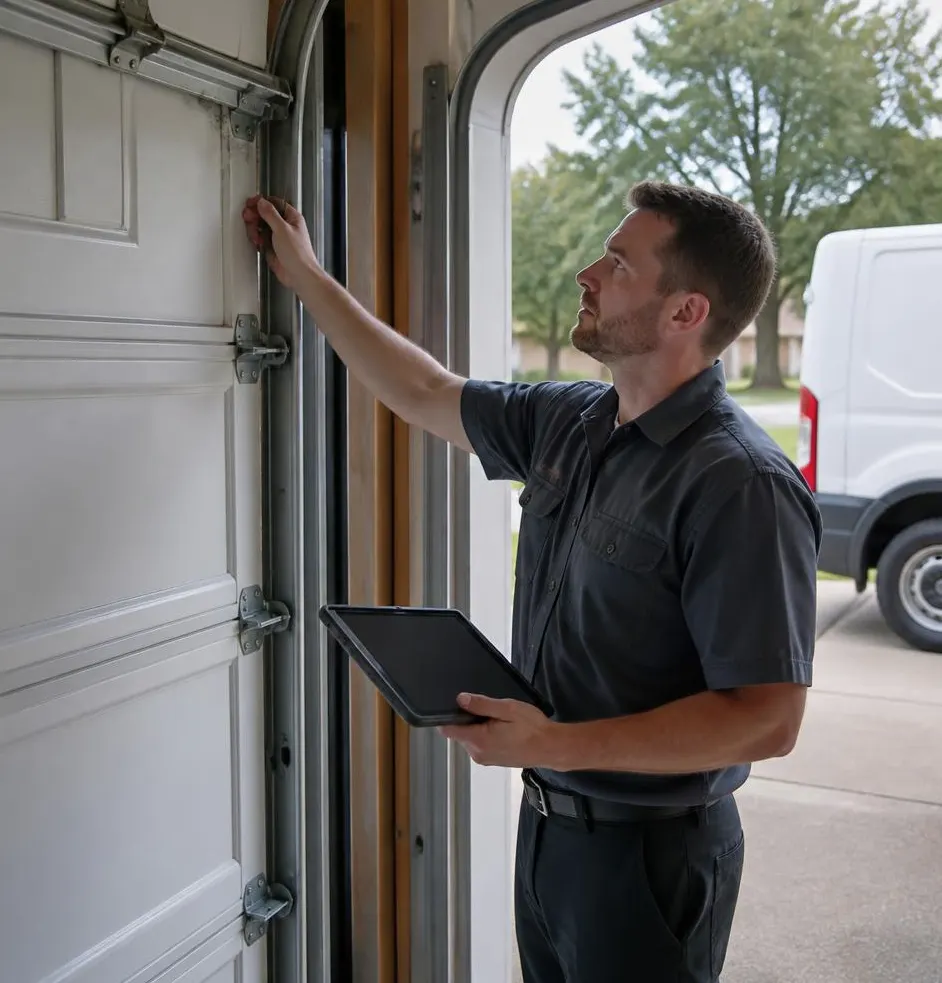
The Short Answer
When the power goes out, pull the red emergency release cord hanging from the trolley on the opener rail. This disconnects the door from the opener so you can lift and lower it by hand. Once power is restored, you reconnect it by pulling the cord again (or using the release lever) and letting the carriage relatch — then test the opener before trusting it with daily use.
During Upper Keys hurricane season, outages after a storm are common, and a garage door is often the only way in or out of a closed-up house. Knowing how to work the door by hand, safely, matters more here than almost anywhere else in Florida.
Tools You'll Need
- A flashlight or headlamp (garages go dark fast once storm shutters are up)
- Work gloves (tracks and hardware get gritty and sometimes rusty near the coast)
- A step stool if your release cord hangs high or the trolley is hard to reach
- Nothing else — this should not require tools, pliers, or force
Step-by-Step: Opening the Door Manually
- Make sure the door is fully closed first, if possible. Disengaging the opener while the door is partway open is riskier and harder to control.
- Find the emergency release cord — a red handle hanging from the trolley that rides along the rail above the door.
- Pull the cord straight down, firmly, until you hear or feel the trolley disconnect from the opener carriage.
- Grip the door by its bottom handle or edge with both hands, not the panel lines, and lift smoothly and evenly.
- Watch how the door moves. A properly balanced door should lift with moderate effort and stay roughly in place when you let go halfway. If it feels unusually heavy, drops on its own, or you hear a loud bang or snap as you lift, stop immediately — that's a spring problem, not something to push through.
Step-by-Step: Closing the Door Manually
- Lower the door slowly, keeping both hands on it the whole way down so it doesn't gain speed.
- Let it seat fully in the track at the bottom — don't force the last inch if it's binding.
- Engage the manual lock if your door has one (a slide bolt or interior latch), especially if you'll be away from the house during the outage. This matters more in storm season, when an unlocked, unpowered door is an easy way for wind and water to get in.
- If the door sticks or binds partway down, don't shove it. Humidity swelling on wood-composite panels or a track that's shifted slightly can cause binding, and forcing it can pop the door off the rollers.
Re-Engaging the Opener After Power Returns
- Close the door manually first, so you're starting from a known, fully-closed position.
- Locate the trolley on the rail and check whether the release arm is still in the disengaged position.
- Pull the release cord toward the door (or push the lever, depending on your model) to put it back in the "connect" position. Most openers have a diagram on the trolley housing showing which direction locks it back in.
- Run the opener by remote or wall button. As the door moves, the carriage should pick up the trolley and relatch with an audible click within the first few inches of travel.
- Test it two or three times — open and close fully — before you consider it back to normal. Listen for grinding, watch for the door reversing unexpectedly, and confirm the safety sensors (the small eyes near the floor on each track) are aligned and blinking steadily, not flashing fast, which signals a misalignment.
What You Can Safely Do vs. What Needs a Technician
- Homeowner-safe: Pulling the release cord, manually lifting and lowering a door that moves smoothly and stays balanced, reconnecting the trolley once power is back, and realigning safety sensor eyes if they've been bumped.
- Call a technician: The door feels heavy, drops fast, or bangs when you lift it (spring under tension or failing). The door is crooked, hangs unevenly, or has jumped the track. The trolley won't relatch properly or makes grinding noises when it tries to pick the door up. Panels are cracked, buckled, or pulling away from the track — common after wind-driven debris during a storm. Anything involving the torsion spring itself is not a DIY repair; those springs are under heavy tension and have caused serious injuries when handled without the right bars and training.
When to Call Tavernier Garage Door Service
If your door felt wrong during a manual open — heavy, uneven, slamming, or just not moving the way it used to — that's worth a call before the next outage, not after. We handle Garage Door Spring Repair for doors that have gone out of balance or snapped a spring, and our Garage Door Maintenance & Tune-Up service checks rollers, cables, and track alignment so the door behaves predictably when you need to run it by hand — no surprises in the dark with a flashlight in one hand. We serve Tavernier, Key Largo, Islamorada, Plantation Key, Windley Key, Layton, Marathon, and Duck Key.
If your garage door gave you any trouble the last time the power dropped, call Tavernier Garage Door Service today and get it checked before the next outage finds the problem for you.