
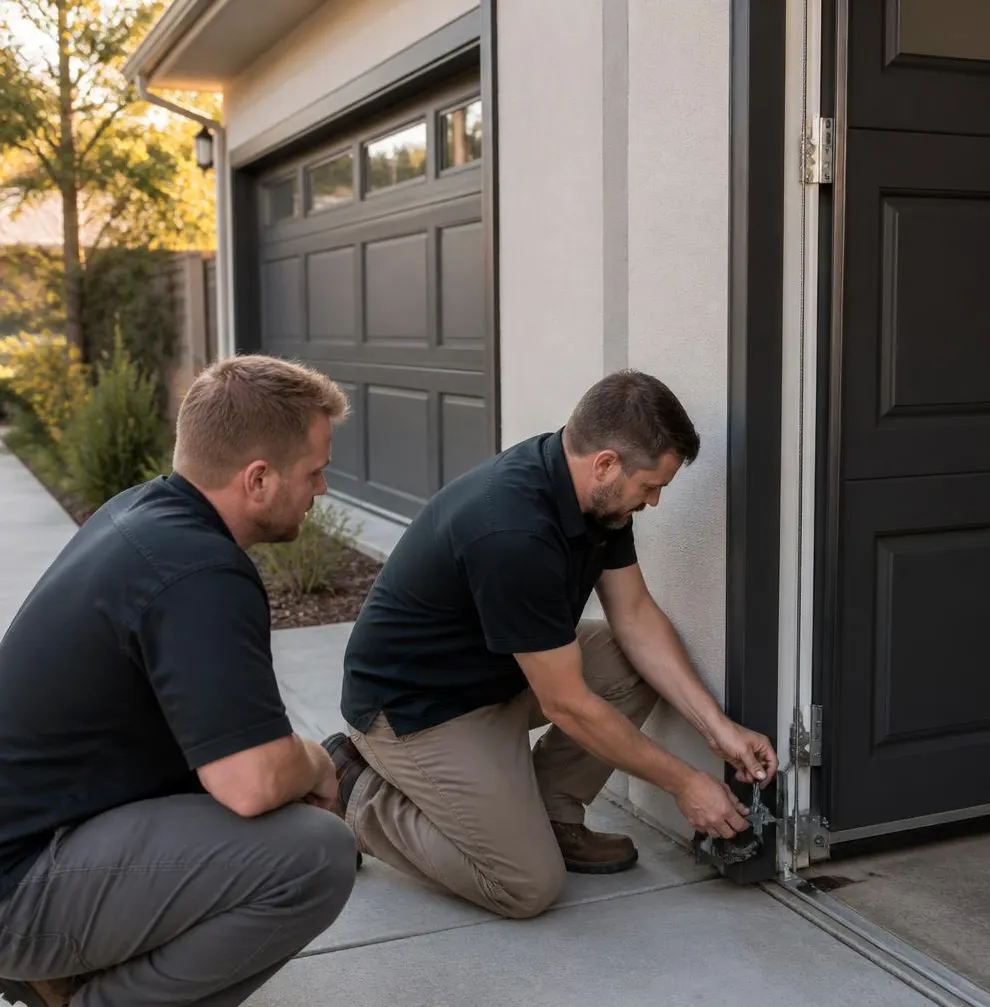
What a Technician Sees This Time of Year
By late fall, most service calls in the Upper Keys follow a pattern. A homeowner notices the garage door groaning on its way up, or the opener seems to be working harder than it used to. Nine times out of ten, the cause traces back to what the door just lived through: months of humidity, salt air, and the occasional named storm. The door survived hurricane season, but the springs are a little rustier, the tracks have picked up grit from wind-blown debris, and the weatherstripping has started to crack from UV exposure. None of it is an emergency yet — but it's exactly the kind of wear that turns into a stuck door or a snapped spring once the weather turns.
Why “Winter” Still Matters Down Here
Winter in the Keys doesn't mean ice or snow, but it does mean a real shift. Nights get cooler, humidity drops from its summer peak, and the daily afternoon downpours that defined your garage door's summer finally taper off. That shift is actually a good opportunity: it's the calmest stretch of weather all year, which makes it the right time to catch up on maintenance that got put off during storm season.
Cooler nights and warmer days also mean more temperature swings than your door sees in summer. Metal tracks and springs contract slightly in cooler air, wood or composite panels that absorbed moisture all summer start to dry out and shrink, and any misalignment that was masked by swelling becomes more noticeable. This is when off-track issues and binding tracks tend to surface.
Clean and Inspect Hardware for Salt Air Damage
Coastal salt air doesn't take a season off, and corrosion on springs, hinges, and rollers is cumulative. Walk your door's hardware with a flashlight:
- Look for orange rust bloom on the torsion spring coils and at hinge pivot points.
- Check roller stems and track bolts for pitting or white corrosion on galvanized parts.
- Wipe down tracks with a damp cloth to remove salt residue before it eats into the metal finish.
A light coat of a garage-door-rated lubricant on hinges, rollers, and the spring itself helps displace moisture and slows corrosion through the drier months ahead.
Re-Tension and Lubricate Moving Parts
Lubricate rollers, hinges, and the torsion spring with a silicone or lithium-based spray — not WD-40, which washes away and doesn't hold up long-term in humid air. While you're at it, open and close the door manually (release the opener first) to feel for grinding, sticking, or uneven movement, all signs the track alignment shifted during the wetter months.
Check Weatherstripping and Seals
The bottom seal and side weatherstripping take a beating from UV and heat all summer, then get tested by any late-season rain. Cracked or flattened seals let water intrude during cold fronts and let conditioned air escape if your garage is attached to living space. Replacing these strips is inexpensive and one of the few jobs a handy homeowner can do without special tools.
Test the Opener and Safety Sensors
Humidity and salt air are hard on electronics. Before the drier season settles in, test your opener's auto-reverse by placing a block in the door's path, and wipe down the photo-eye sensors near the floor — grime and spider webs collect there more than people expect, especially after a summer of storms. If the opener has started reversing randomly or responding slowly to the remote, that's worth having looked at before it fails outright.
Inspect Panels for Swelling or Warping
If your door has wood composite panels, check for swelling along the bottom edge or seams where moisture tends to collect. As the air dries out, panels that absorbed water all summer may shrink unevenly, creating gaps or misalignment at the seams. Catching this early is far cheaper than waiting for a full panel to warp or delaminate.
When to Call Tavernier Garage Door Service
If your door is sticking, grinding, or the opener is acting unpredictably after everything it went through this year, that's your cue. Our Garage Door Maintenance & Tune-Up service covers exactly this kind of post-storm-season inspection: hardware, tracks, springs, opener sensors, and seals, all checked and adjusted in one visit. If a spring has visible rust damage or the door has drifted off its track, our Garage Door Spring Repair and Off Track Door Repair services get it back to smooth, safe operation before the issue turns into a door that won't open at all.
Give Tavernier Garage Door Service a call to schedule a seasonal tune-up for your home in Tavernier, Key Largo, Islamorada, or anywhere in the Upper Keys — we'll have your door ready for the calmer months ahead.