
The Short Answer
A garage door is usually the largest opening in a home's exterior, and if it isn't rated for wind load or isn't properly reinforced, it's often the first thing to fail in a storm. Once it blows in, wind pressure builds inside the garage and can lift the roof or blow out walls. Hurricane season in the Keys runs through November, so late October is not the time to assume you're in the clear. Check your door's rating, test the hardware, and fix anything loose or rusted before the next system spins up.
Why the Garage Door Fails First
Exterior walls are built to resist wind pressure as a continuous surface. A garage door is a large moving panel held in place by tracks, rollers, and a handful of hinges and fasteners. Under sustained wind, especially gusts that shift direction, that panel flexes. If the wind-load rating is too low for the door, or if years of salt air have weakened the hardware, the door can buckle, pop off the track, or blow in entirely.
Once the garage door fails, the building essentially has a hole in it. Wind that would have deflected off a solid wall now rushes into the garage, pressurizes the space, and pushes outward on the roof and walls from the inside. This is a major reason insurers and building codes pay close attention to garage doors specifically in hurricane-prone areas.
What Salt Air and Humidity Do Between Storms
Even in a quiet stretch of weather, the Keys climate works against garage door hardware year-round. Salt air corrodes steel tracks, hinges, and springs faster than it would inland. Humidity causes wood-composite panels to swell, which can bind the door in its tracks or keep it from sealing fully. Afternoon downpours drive moisture into gaps around the bottom seal and weatherstripping, and that moisture sits in a hot, humid garage instead of drying out quickly. All of this means hardware that looked fine a year ago may already be compromised heading into the last weeks of hurricane season.
Pre-Storm Checklist
- Check the wind-load rating. Look for a label on the door or in the installation paperwork. If you don't have documentation, treat that as a reason to get it inspected rather than assume it's adequate.
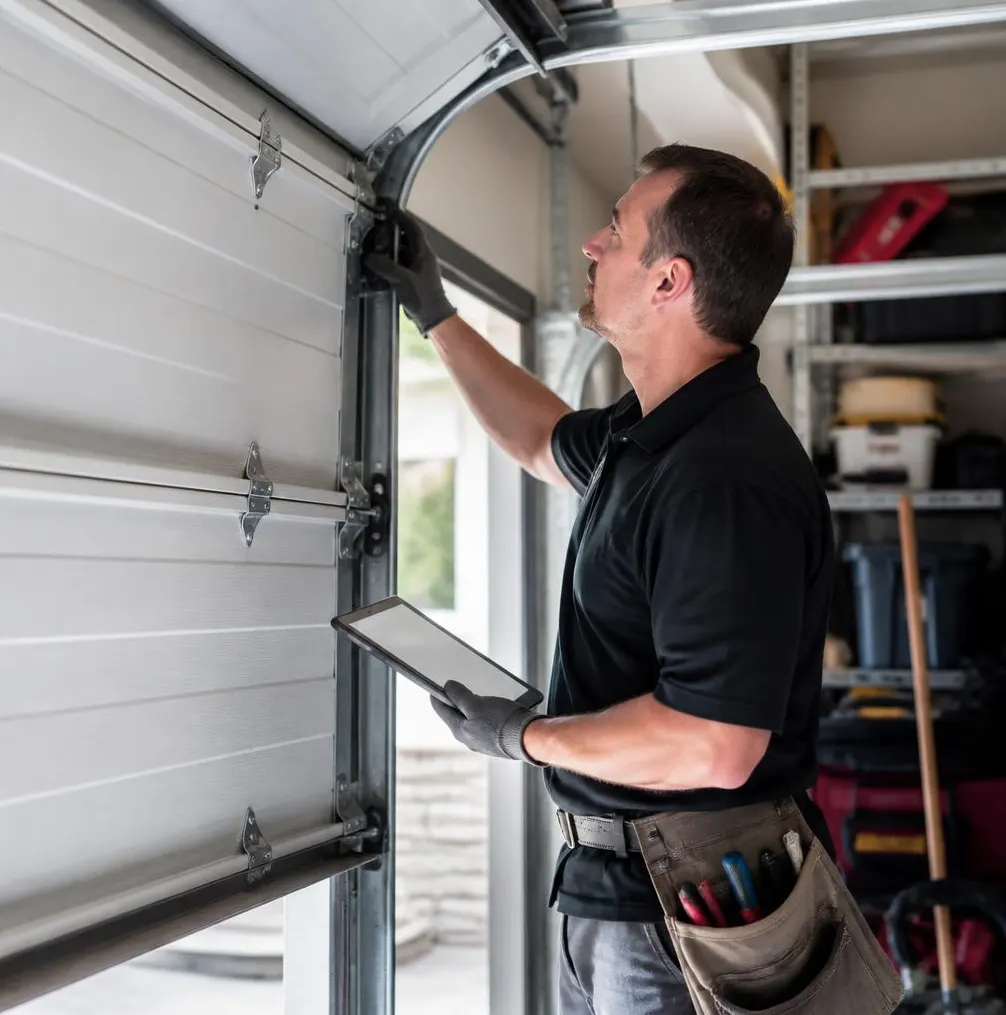
- Inspect the tracks and rollers. Rust, pitting, or rollers that wobble in the track are signs the door won't hold steady under pressure. Clean visible surface rust and lubricate moving parts with a garage-door-rated lubricant, not household oil, which attracts grit.
- Test the springs. Disconnect the opener and lift the door manually. It should move smoothly and stay roughly in place when lifted halfway. If it feels heavy, drops suddenly, or the lift is uneven side to side, the springs are likely worn or mismatched.
- Tighten hardware. Hinges, track brackets, and roller brackets loosen over time from vibration and thermal expansion. A quarter-turn on every bolt can meaningfully stiffen the whole system.
- Check the bottom seal and weatherstripping. Cracked or flattened seals let wind-driven rain in during normal afternoon storms, and they're a sign the seal won't do much in a hurricane either.
- Consider a bracing kit. Horizontal or vertical bracing kits reinforce a panel door against wind pressure and are a lower-cost option than full replacement if the door itself is otherwise sound.
- Know your opener's backup plan. If you lose power, can you still lock the door manually or disengage the opener safely? Confirm the manual release works before you need it in a storm.
Signs Your Door Won't Hold
A few red flags mean a door needs attention now, not after the next watch is issued: visible gaps where the door meets the frame, a panel that flexes noticeably when you push on it, tracks that have pulled away from the wall even slightly, or an opener that struggles and reverses on its own. Any of these point to a door that's already under more stress than it should be in calm weather, let alone sustained wind.
When to Call Tavernier Garage Door Service
If your door's wind rating is unclear, the hardware shows real corrosion, or it's been years since a professional looked at the springs and tracks, it's worth a visit before the season winds down in November. Tavernier Garage Door Service handles garage door maintenance and tune-ups to catch worn rollers, loose hardware, and corrosion early, and garage door spring repair when the lift mechanism is no longer balanced. If the door itself is undersized for current wind-load expectations, a new garage door installation rated for Keys conditions is often the more durable fix than patching an older one repeatedly.
Don't wait for the next storm warning to find out your garage door isn't ready. Call Tavernier Garage Door Service today to schedule an inspection anywhere from Tavernier to Islamorada, Marathon, or Duck Key.